You know reviews matter. Every time you choose a restaurant, a tradesman, a dentist — you check the reviews first.
Your customers do the same. Before they call you, they've already decided whether you look trustworthy. And that decision is based almost entirely on what other people say about you.
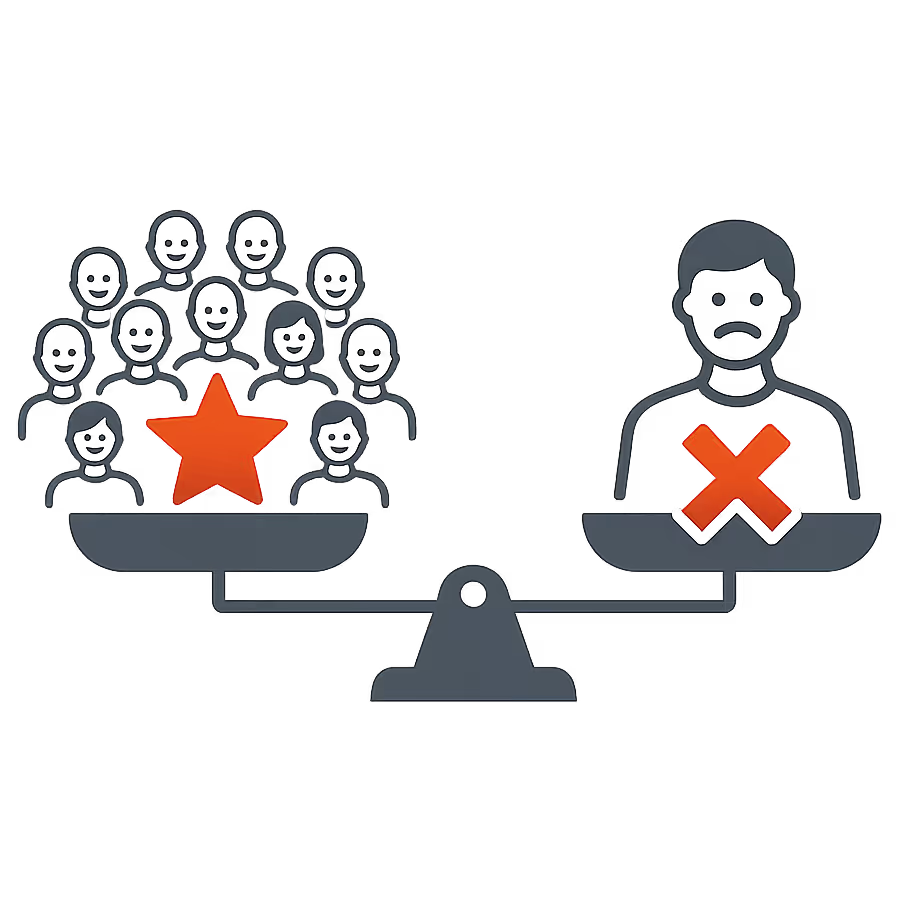
The problem is, reviews don't generate themselves. Happy customers forget. Unhappy customers remember. And the businesses that win aren't necessarily the best — they're the ones who've built systems to capture proof consistently.
Here's what typically happens:
You do great work. Customer's happy. They say they'll leave a review. They mean it. Then they get home, life takes over, and they forget.
Meanwhile, the one customer who had a bad experience — maybe it wasn't even your fault — they remember. They leave a one-star review. It sits there, dragging down your average, putting off everyone who searches for you.
You don't have a service problem. You have a visibility problem. Your happy customers are invisible. Your unhappy ones aren't.

.png)
Systematic Generation — Asking for reviews can't depend on you remembering, or your team remembering, or hoping customers do it themselves. We build systems that ask at the right time, in the right way, making it as easy as possible for happy customers to leave their feedback. Automated but personal. Consistent but not robotic.
Platform Focus — Not all reviews are equal. For most local businesses, Google reviews matter most — they show up in search, they affect rankings, they're what customers see first. We focus effort where it counts, rather than spreading thin across platforms that don't move the needle.
Response Management — Every review deserves a response. Positive reviews get genuine thanks — not copy-paste templates that look automated. Negative reviews get professional, constructive responses that show future customers how you handle problems. How you respond to criticism often matters more than the criticism itself.
Monitoring & Alerts — New reviews across all platforms, tracked in one place. Alerts when something needs attention. Nothing slips through the cracks.
Sentiment Tracking — What are customers actually saying? What do they praise? What do they complain about? Review analysis that surfaces patterns — operational insights, not just reputation management.
Managing reviews for one location is straightforward. Managing them across ten, twenty, fifty locations is where most businesses fall apart.
Different team members. Different response styles. Some locations actively generating reviews, others silent for months. No central visibility into what's happening across the network.
We build infrastructure that scales:
Your newest location starts generating reviews from day one. Your quietest location gets the same attention as your busiest.
.png)

Reviews compound. A business with 200 reviews beats a business with 20 — even if the smaller one has a higher average rating.
Volume signals trust. Recency signals relevance. A steady stream of fresh reviews tells Google — and customers — that you're active, credible, and chosen by real people.
The businesses that start building review systems today will be untouchable in two years. The ones that keep meaning to get around to it will still be wondering why competitors are getting all the calls.
Businesses who know reviews matter but struggle to generate them consistently. Who have a good service but a review profile that doesn't reflect it. Who operate multiple locations and need systematic reputation management. Who want to build a moat that competitors can't easily replicate.